Research at the Hamm Institute
Our Research and ReportsBrowse flagship reports, partner analyses, and policy briefs on firm power, critical infrastructure, and allied energy security.
Ensuring America's Energy Leadership
(July 2026) Examines a state-level roadmap for strengthening U.S. energy leadership through three priorities: permitting reform, reliable and affordable power, and energy security. Recommends bipartisan state actions to accelerate energy infrastructure development, expand dispatchable generation and grid capacity, protect critical infrastructure, strengthen domestic manufacturing and workforce pipelines, and ensure new electricity demand supports its own costs.
TESC. Critical Minerals Deep Dive: Securing the Battery Supply Chain
(July 2026) Identifies the most strategic opportunities for U.S.-Japan-South Korea coordination across battery material supply chains, with a focus on midstream processing, refining, recycling and engineered materials.
Appendices
TESC. Uranium Processing Supply Chain Security: A Framework for Trilateral Investment Coordination
(June 2026) Examines uranium supply chain vulnerabilities affecting the United States, Japan and South Korea, with particular focus on concentrated conversion, enrichment and high-assay low-enriched uranium (HALEU) capacity. Recommends a trilateral strategy to expand allied midstream processing, aggregate long-term demand, strengthen upstream access and reduce dependence on Russian and Chinese fuel-cycle services.
TESC. The 2026 Strait of Hormuz Disruption: Impacts on the United States, Japan, and the Republic of Korea, and a Trilateral Path to Resilience
(May 2026) Examines the energy security impacts of a Strait of Hormuz disruption on the U.S., Japan, and South Korea, and recommends a trilateral resilience strategy focused on price stabilization, strategic reserves, LNG infrastructure, export capacity, and allied coordination.
TESC. Near Term Oil and Gas Supply Surplus Uncertainties: A Glut, a Buffer, or Something Different?
(March 2026) This opinion editorial argues that the apparent near-term oil and gas glut may be a fragile buffer, with LNG especially exposed to volatility and energy security risk.
The Strategic Role of Coal in US Energy Security: Future Scenarios, Risks, and Opportunities
(March 2026) Assesses coal’s role under current federal policy and concludes that while Washington can slow retirements and preserve select plants on reliability grounds, market fundamentals still point to a smaller coal fleet as gas, nuclear, and storage scale up.
TESC. Critical Minerals Supply Chain Security: A Framework for Trilateral Investment Coordination
(Feb. 2026) A trilateral investment framework for critical mineral supply chains, prioritizing coordinated decisions across value-chain stages and geographies to improve resilience and complementarity.
Appendices
Gasoline Inflation Lagging CPI Since the Shale Oil Revolution
(Jan. 2026) Shows gasoline was not a consistent driver of U.S. inflation during the shale era (2010 to 2025), while noting periods when pump prices outpaced CPI.
TESC. Economic Evaluation of LNG Potential in Vietnam
(Jan. 2026) Concludes that Vietnam’s fast-rising power demand will require significant LNG-to-power buildout and that dispatch, tariff, and fuel-cost reforms are critical to project financeability.
Combined Cycle Gas Turbine (CCGT) Plants Employment Forecast Analysis
(Dec. 2025) Forecasts direct U.S. employment from CCGT plant construction and operations from 2025 to 2030, showing a near-term construction hiring surge followed by slower growth in operations jobs.
TESC. Securing Energy Leadership through SMR Innovation: Strategic Insights for the U.S., Japan, and South Korea
(Dec. 2025) Examines how trilateral regulatory alignment, alongside financing, supply chain, and public acceptance reforms, can accelerate SMR commercialization across the U.S., Japan, and South Korea.
The Rise of AI: A Reality Check on Energy and Economic Impacts
(Nov. 2025) Study by Mark P. Mills assessing AI-driven electricity demand growth and the practical constraints on supplying it, with implications for planners, policymakers, and investors.
Data Center Employment Forecast Analysis
(Nov. 2025) Provides a field-benchmarked forecast of construction and operations jobs tied to the U.S. data center buildout from 2025 to 2030.
Regulatory Harmonization for SMRs: Direct and Opportunity Cost Implications
(Oct. 2025) Concludes that cross-country SMR regulatory harmonization creates the most value by shortening licensing and approval timelines, with schedule gains that preserve significant project value.
TESC. Investment Priorities: Strategic Framework for US-Korea-Japan Collaboration
(Oct. 2025) Identifies tiered trilateral investment priorities, especially in critical minerals processing and workforce capacity, to reduce supply-chain dependence and strengthen shared energy security.
A Framework for Nuclear Regulatory Modernization
Summarizes practical pathways to modernize U.S. nuclear regulation, focusing on licensing scope, NRC process issues, NEPA reviews, and standards.
Powering AI with American Energy: Natural Gas
(July 2025) Explains why natural gas is positioned as the near-term reliability backstop for surging data center load, while flagging infrastructure and supply chain constraints.
Next-Gen Power: Geothermal for the AI and Industrial Era
(July 2025) Makes the case for scaling next-generation geothermal as a firm, secure power source for AI-era demand growth, and outlines key barriers and policy needs.
White Paper: A New American Nuclear Renaissance
(June 2025) Concludes that a durable U.S. nuclear revival will require coordinated reforms to licensing, permitting, fuel supply, and public communication to move advanced reactors toward commercial deployment.
TESC. Securing Critical Mineral Supply Chains: Lessons from Japan and Opportunities for Trilateral Cooperation
(May 2025) Uses Japan’s experience to recommend trilateral strategies, including processing, recycling, stockpiling, and allied coordination, to reduce critical mineral supply-chain vulnerability.
TESC. Trilateral Pathways to SMR Deployment: A Strategic Framework for U.S.-South Korea-Japan Cooperation
(May 2025) Concludes that the Triad should pursue shared SMR standards, joint pre-licensing, and regulatory harmonization to speed deployment and reduce costs through standardization.
TESC. Securing the Future of LNG: Challenges and Collaborative Solutions for the U.S., South Korea, and Japan
(April 2025) Evaluates LNG market volatility and interdependence and calls for stronger U.S.-Japan-Korea coordination to support allied energy security and long-term competitiveness.
TESC. Changing the Game: Energy Security and Geopolitical Alliances
(Feb. 2025) Maps energy security risks facing the U.S., Japan, and South Korea and outlines cooperative strategies on supply chains, diversification, and trade resilience.
American Energy + AI Initiative
The American Energy + AI Initiative brings together leaders across energy, technology, utilities, and policy to unlock the pathways needed to meet fast-rising power demand. We translate shared challenges into practical solutions across project finance, supply chains, transmission buildout, public-private partnerships, and workforce readiness.
Impact highlights:
- Translate AI and data center load growth into grid and energy needs
- Identify permitting and infrastructure bottlenecks across generation, transmission, and pipelines.
- Pressure-test timelines and tradeoffs for near-term firm capacity, including gas and nuclear.
- Build the workforce pipeline for operations, construction, and critical infrastructure.
Energy Security & Geopolitics
Energy security shapes prices, industrial competitiveness, and national security. We analyze how global market shifts, supply-chain constraints, and allied coordination affect the reliability and affordability of energy. Our Trilateral Energy Security Committee (TESC) (U.S., Japan, South Korea) turns shared priorities into deployable solutions.
Impact highlights:
- Align allied priorities on LNG, nuclear, and grid reliability.
- Provide policy-relevant analysis leaders can use.
- Support cross-border coordination on regulation, standards, and supply chains.
- Track risks that move markets, including chokepoints, sanctions, and disruptions.
- Develop recommendations that strengthen long-term stability and resilience.
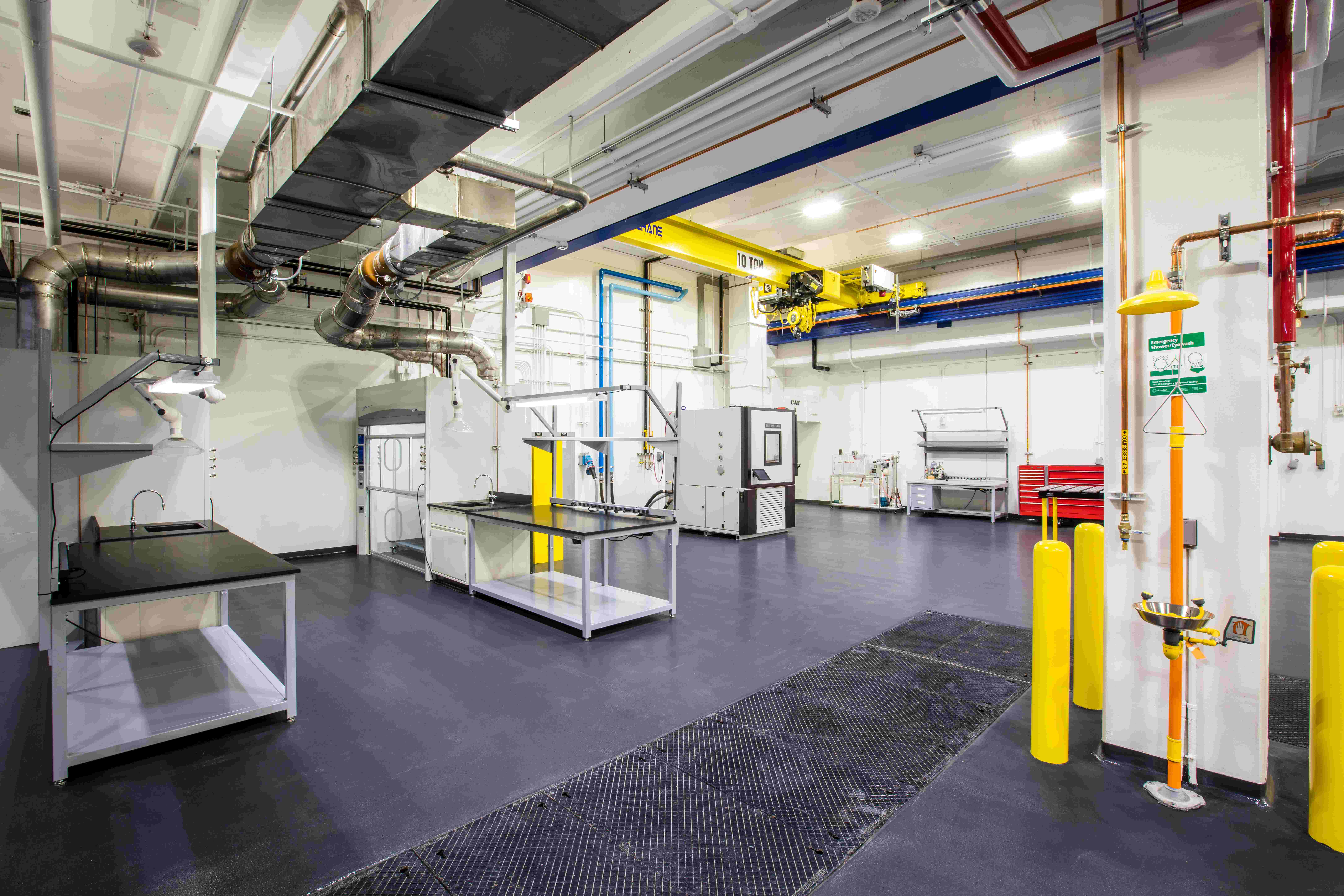
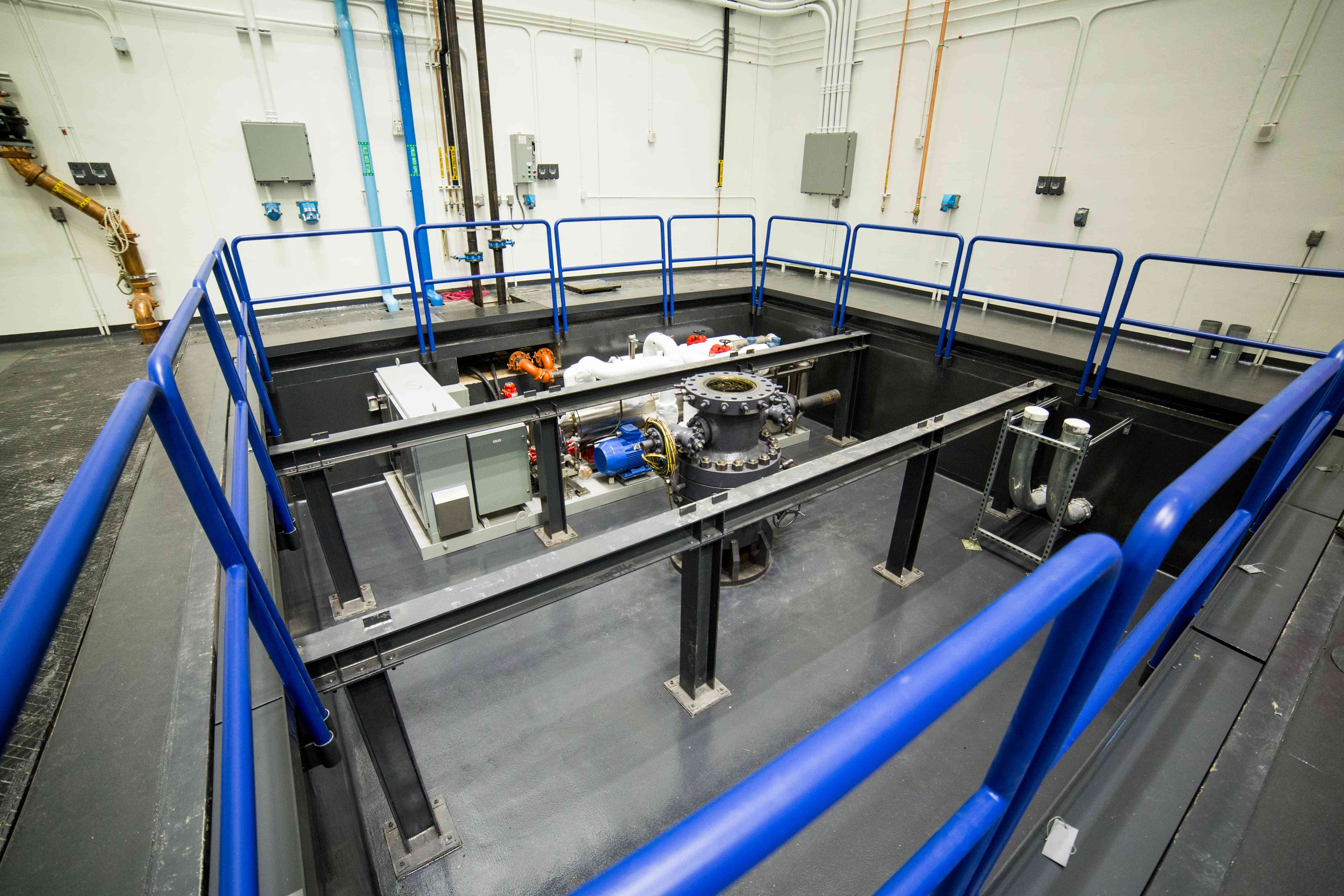
Hamm Institute LaboratoryOur lab turns research into proof-of-concept work that partners can evaluate. Fellows and students test practical approaches tied to AI infrastructure, energy systems, and industrial constraints. We also host partner-supported projects when the question needs real measurements, not modeling alone.